
New Delhi says existing food stocks will be sufficient to contain any food price shock.

Weaker demand for Indian exports and higher financing costs will lead to a deceleration in India's gross domestic product (GDP) growth rate to 7.9 per cent in 2008, the International Monetary Fund has said.The IMF's growth projections for India are in line with other estimates, including that of the Asian Development Bank, which pegged the 2008-09 growth at 8 per cent.

'Limited spillovers' to Asia's third-largest economy, even as world 'perilously close' to recession.

The Indian economy is likely to witness close to double-digit growth in the current fiscal year despite the second COVID-19 wave ravaging the country, Principal Economic Adviser (PEA) Sanjeev Sanyal said on Wednesday. The economy is slowly getting back to normalcy as the number of COVID-19 cases is declining, he said while participating in India Global Forum event. "We are probably going to see close to double-digit, if not double-digit (growth) in this financial year," he said.

Chief Economic Adviser K V Subramanian on Wednesday said India is expected to hit a growth rate of 6.5-7 per cent in 2022-23 and accelerate further to 8 per cent in the subsequent years on the back of reforms undertaken by the government. He also said the government is expected to meet the fiscal deficit target of 6.8 per cent in the current fiscal despite pressure on revenue collections.

The Lok Sabha elections in 2024 are not a consideration when it comes to monetary policymaking, said Reserve Bank of India governor Shaktikanta Das to underscore the central bank's commitment to controlling inflation. "It's not possible for me to comment what we do in the next MPC (Monetary Policy Committee), but one thing I can tell and I would like to make it very clear-that the fact of elections coming up in 2024 is not a factor at all so far as monetary policymaking is concerned. "Monetary policymaking is for checking (and) controlling inflation," Das said at the Business Standard, BFSI Insight Summit.

S&P Global Ratings on Thursday said the Indian economy is projected to grow at 11 per cent in the current fiscal, but flagged the "substantial" impact of broader lockdowns on the economy. In its report on Asia-Pacific Financial Institutions, S&P said the control of COVID-19 remains a key risk for the economy. New infections have spiked in recent weeks and the country is in the middle of a second pandemic wave.

S&P Global Ratings on Wednesday slashed India's GDP growth forecast for the current financial year to 9.8 per cent saying the second Covid wave may derail the budding recovery in the economy and credit conditions.

Automobile retail sales in India witnessed a double-digit year-on-year growth in February driven by robust sales across segments including passenger vehicles and two-wheelers, automobile dealers' body FADA said on Monday. Total registrations across segments rose 16 per cent year-on-year to 17,75,424 units last month, as compared to 15,31,196 vehicles in February 2022. Passenger vehicle retail sales rose 11 per cent to 287,182 units last month, against 258,736 units in the year-ago period.

The Indian economy remains on track to regain its position as the world's fastest-growing major economy after official estimates on Friday put the expansion at a tempered 9.2 per cent this fiscal amid concerns over the impact of a resurgent virus on the fragile recovery. The growth in the gross domestic product (GDP) of 9.2 per cent in April 2021 to March 2022 fiscal (FY 2021-22) given by the National Statistical Office (NSO) in its first advance estimate compares with 9.5 per cent expansion forecast by the Reserve Bank of India (RBI) last month. The economy had contracted by 7.3 per cent in the previous financial year.

The finance ministry on Thursday raised concerns over the possible impact of El Nio conditions on India this year, saying if recent forecasts came true, the country could see lower agricultural output and higher inflation. "Some meteorological agencies predict the return of El Nio conditions in India this year. "If these predictions are accurate, then monsoon rains could be deficient, leading to lower agricultural output and higher prices," the ministry said in its monthly economic review.

India has been relatively insulated from the severe headwinds in the West. However, with a third of the global economy expected to slip into recession in calendar year 2023, the impact will strongly be felt on India's exports and trade economy, leading economists said in a panel discussion at the Business Standard BFSI Insight Summit in Mumbai on Wednesday. The panel comprised former Reserve Bank of India executive director and former Monetary Policy Committee member Mridul Saggar, State Bank of India Chief Economic Advisor Soumya Kanti Ghosh, Citibank India Chief Economist Samiran Chakraborty, ICRA Chief Economist Aditi Nayar, and IndusInd Bank Chief Economist Gaurav Kapoor. The topic of the panel discussion was No recession in sight: Is India decoupled from developed economies?

The development of private data sources is a hugely positive development. It should serve as a challenge to the government to improve its own record on producing timely and reliable statistics, points out T N Ninan.

The economic impact of the Omicron variant of COVID-19 on emerging economies will depend on a mix of government restrictions, public comfort with social interactions, and capacity of governments and central banks to provide additional policy support to the private sector, Moody's Investors Service said on Wednesday. The emergence of the new variant poses new risks to the global economic growth and inflation outlook, as concerns mount about the variant's health risks and several countries have imposed new travel restrictions in recent days. These restrictions will likely increase over the coming weeks until scientists learn more about the variant, it said.

Stating that COVID-19 has not yet been contained in India, the rating agency in a statement said the government stimulus package is low relative to countries with similar economic impacts from the pandemic. "The COVID-19 outbreak in India and two months of lockdown -- longer in some areas -- have led to a sudden stop in the economy. That means growth will contract sharply this fiscal year (April 2020 to March 2021)," it said. "Economic activity will face ongoing disruption over the next year as the country transitions to a post-COVID-19 world."
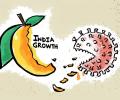
The Reserve Bank on Wednesday retained the GDP growth forecast at 9.5 per cent for the current fiscal but cautioned that the economic recovery is not yet strong enough to be self-sustaining and durable.

India's services sector growth accelerated in April, as strong demand conditions resulted in the fastest increase in new business and output in close to 13 years, a monthly survey said on Wednesday. The pick-up in demand occurred in spite of escalating price pressures. The seasonally adjusted S&P Global India Services PMI Business Activity Index rose from 57.8 in March to 62.0 in April, signalling the fastest expansion in output since mid 2010, amid a pick-up in new business growth and favourable market conditions.

Rainfall in August is predicted to be below normal (less than 94 per cent of LPA), but the situation is expected to improve comparatively in September, the IMD said.

India's second largest IT services company Infosys on Thursday reported a 3.1 per cent year-on-year rise in net profit to Rs 6,215 crore for the September 2023 quarter. The earnings (before minority interest) of the Bengaluru-based company stood at Rs 6,026 crore in the year-ago period. The company - which competes in the IT services market with TCS, Wipro, HCL Technologies and others - saw its revenue rising 6.7 per cent to Rs 38,994 crore for the just-ended September quarter.

Moody's Investors Service on Tuesday lowered India's GDP growth forecast for the 2020 calendar year to 5.3 per cent, on coronavirus implications on the economy. Moody's had in February projected a 5.4 per cent real GDP growth for India in 2020. This too was a downgrade from 6.6 per cent earlier forecast.

A British brokerage on Tuesday cut India's FY22 GDP growth estimate by a sharp 0.80 per cent to 9.2 per cent, saying the economic impact of the second wave of infections has been deeper than initially expected. Barclays chief India economist Rahul Bajoria also mentioned the slow pace of vaccinations in the country and the rolling lockdowns across many states for the estimate. It can be noted that last month has seen a slew of similar forecasts from analysts, even as the RBI maintained its estimate of a 10.5 per cent growth in real GDP.

China's population in 2022 -- 1.4118 billion -- fell by 850,000 from 2021, the National Bureau of Statistics (NBS) said.

The likelihood is that India will maintain a moderately upbeat economic tempo -- well short of tearaway growth, explains T N Ninan.

India's services sector activity witnessed a sharp upturn in August on the back of stronger gains in new business, ongoing improvements in demand conditions and job creation, a monthly survey said on Monday. The seasonally adjusted S&P Global India Services PMI Business Activity Index rose from July's four-month low of 55.5 to 57.2 in August, amid a quicker upturn in business activity and the sharpest rise in employment for over 14 years. For the thirteenth straight month, the services sector witnessed an expansion in output.

India is poised to be the fastest-growing major economy in the world and an engine of global growth despite global headwinds, says leading industrialist and Aditya Birla Group Chairman Kumar Mangalam Birla. The economic activity in India has witnessed a sharp recovery to pre-pandemic levels on the back of a rapid and widespread rollout of the vaccination programme, Birla said in the latest annual report of UltraTech Cement Ltd. "A strong digital ecosystem, fiscal and monetary policy and various government schemes helped small and medium enterprises and the worst affected sections of the population to survive while reviving demand and bringing the economy back on track," said Birla while addressing UltraTech's shareholders.

The International Monetary Fund (IMF) on Tuesday said it is expecting some slowdown in the Indian economy next fiscal year and projected the growth to 6.1 per cent from 6.8 per cent during the current fiscal ending March 31. The IMF on Tuesday released the January update of its World Economic Outlook, according to which the global growth is projected to fall from an estimated 3.4 per cent in 2022 to 2.9 per cent in 2023, then rise to 3.1 per cent in 2024. "Our growth projections actually for India are unchanged from our October Outlook.

The Indian services sector growth touched a six-month high in December, supported by a robust intake of new work and favourable market conditions, a monthly survey said on Wednesday. The seasonally adjusted S&P Global India Services PMI Business Activity Index rose from 56.4 in November to 58.5 in December, highlighting the strongest rate of expansion since mid-2022. For the 17th straight month, the headline figure was above the neutral 50 threshold.

So, while it is great that India's numbers look relatively good, don't raise a cheer just yet, points out T N Ninan.

'Chinese real GDP growth is 7.1% and India's is 7.4%'.

India's exports contracted 12.2 per cent to $34.48 billion in December 2022, mainly due to global headwinds, and the trade deficit widened to $23.76 billion during the same period, according to official data released on Monday. Imports in December 2022 also declined 3.5 per cent to $58.24 billion as against $60.33 billion in the year-ago period. In December 2021, exports stood at $39.27 billion and the trade deficit was at $21.06 billion.

India's economy, estimated to contract by 6.9 per cent in 2020 due to the coronavirus pandemic, is forecast to record a "stronger recovery" in 2021 and grow by 5 per cent, according to a UN report which said the country's current fiscal year budget points to a shift towards demand-side stimulus, with an uptick in public investment. The report, 'Out of the frying pan ...Into the fire?' published Thursday as an update to the Trade and Development Report 2020 by UN Conference on Trade and Development (UNCTAD) said the global economy is set to grow by 4.7 per cent this year, faster than the 4.3 per cent predicted in September 2020, thanks in part to a stronger recovery in the US, where progress in distributing vaccines and a fresh fiscal stimulus of $1.9 trillion are expected to boost consumer spending.

India's manufacturing sector activity hit the highest level in eight months in July, driven by a significant rise in business orders, a monthly survey said on Monday. The seasonally adjusted S&P Global India Manufacturing Purchasing Managers' Index rose from 53.9 in June to 56.4 in July, reflecting the strongest improvement in the health of the sector in eight months. The July PMI data pointed to an improvement in overall operating conditions for the 13th straight month.

Retail inflation fell to a 15-month low of 5.66 per cent in March, mainly due to a decline in food prices, government data showed on Wednesday. The inflation figure in March is within the RBI's comfort zone as it is below 6 per cent. The retail inflation based on Consumer Price Index (CPI) was 6.44 per cent in February 2023 and 6.95 per cent in the year-ago period.
The rating agency said, rising COVID-19 cases in India will keep private spending and investment lower for longer.
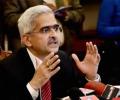
Following are the highlights of the RBI's first monetary policy statement of 2022-23 unveiled by Governor Shaktikanta Das: Policy repo rate unchanged at 4%; marginal standing facility rate & bank rate too remain unchanged at 4.25%. Monetary stance to be accommodative with focus on withdrawal of accommodation to keep inflation within target. GDP growth projection for FY'23 slashed to 7.2% from 7.8%; growth projections based on assumption of crude oil (Indian basket) price at $100 a barrel during FY'23. Inflation forecast hiked to 5.7% for FY'23 from 4.5%.

Strong macroeconomic headwinds causing turbulence in the $245-billion Indian IT industry are yet to calm down. Top Indian IT services companies are likely to post a decline or just marginal growth in sequential revenue in Q1FY24 because of a soft discretionary spending environment. Though the first quarter is seasonally strong for IT firms, "June 2023 will be an exception", according to analysts at Kotak Institutional Equities.

It's always been a struggle for economists and statisticians to forecast India's gross domestic product (GDP) correctly, and say where the economy is headed before the official numbers come out. If estimating the GDP is tough, forecasting it in real time is complicated. It involves looking at tens of indicators, such as industrial production, electricity consumption and exports, to arrive at a number.
Indian economy recorded a growth of 5.5 per cent in the first quarter of 2012-13.

Key stock indices Sensex and Nifty declined over 1 per cent at close on Monday due to heavy selling in banking, auto and FMCG shares amid weak global market trends and continued foreign fund outflows. Reversing its previous session's gains, benchmark BSE Sensex tumbled 638.11 points or 1.11 per cent to settle at 56,788.81. During the day, it tanked 743.52 points or 1.29 per cent to 56,683.40. The broader NSE Nifty fell by 207 points or 1.21 per cent to end at 16,887.35 as 42 of its constituents declined.

'India has always been a bottom-up stock-picking market, and as growth recovers with higher liquidity, mid and small-caps always tend to outperform.'
